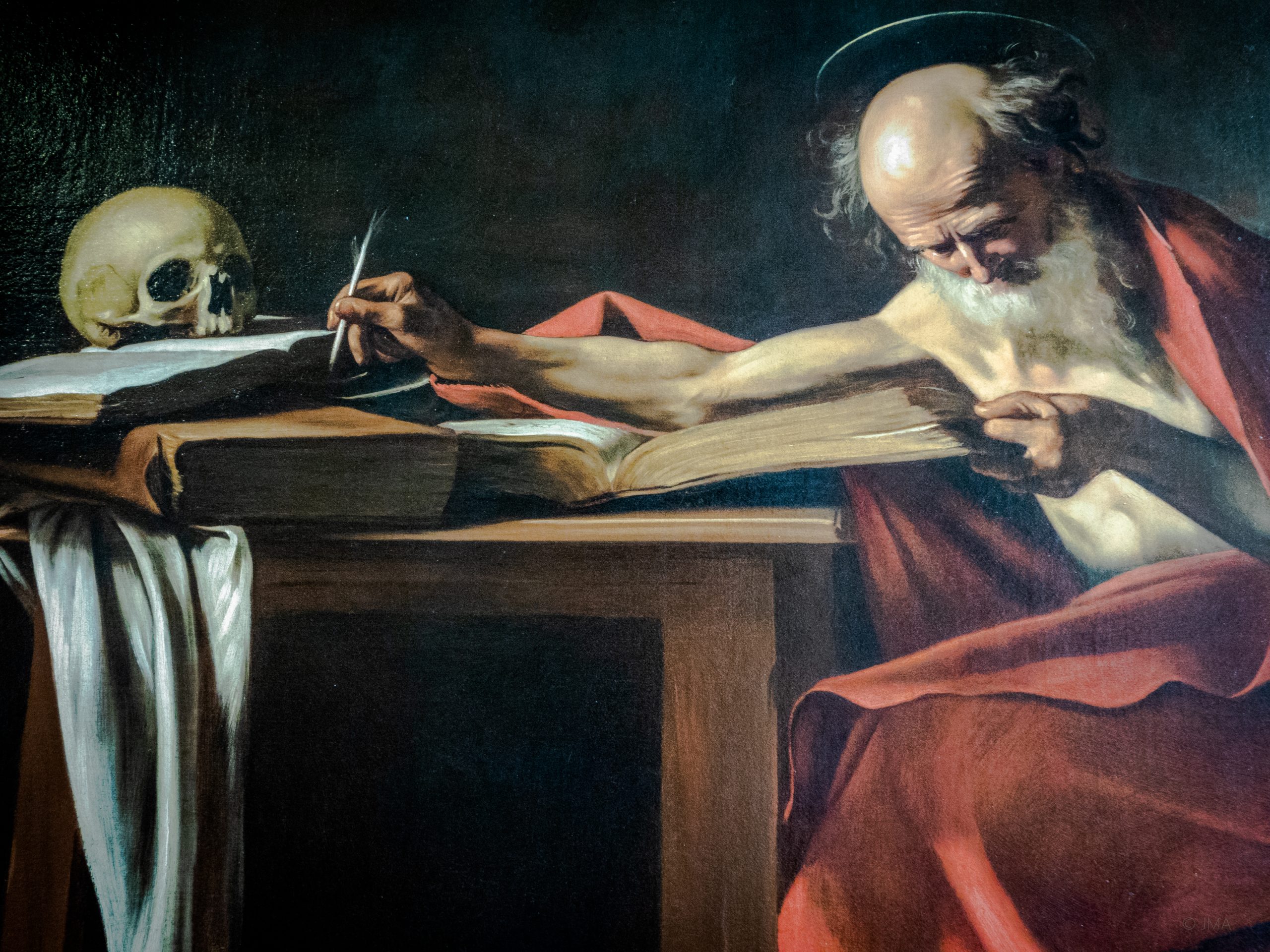
Today we celebrate the Saint primarily responsible for translating God’s Word into the language of common people. Inspired by the Holy Spirit, Saint Jerome made the sacred Scriptures come to life. Jerome could well be considered the patron saint of all Bible translators. Many modern Bibles, even the sacrosanct King James Version, used his Latin Vulgate for their foundation. Just who was Jerome and what led him to study Scripture and strive toward sainthood?
Born in 342, Jerome benefitted from a quality education in Rome, learning from the best teachers of his day. He did not, however, benefit from a Christian foundation and fell into decadent ways. His path took a detour when he and his friends started visiting the tombs of the martyrs and apostles in the catacombs. Before long, Jerome was inspired to dedicate his life to Christ.
To distract himself from temptation, Jerome made a commitment to learn Hebrew from a fellow monk who had converted from Judaism. He found the Semitic language challenging, but he set his sharp mind to the task and persevered. Jerome was ordained a priest, but felt drawn to the monastic life. He went to Constantinople to study Scripture under the great St. Gregory of Nazianzen. Later, he journeyed to Rome to attend a church council and was retained there by Pope Damasus I to be his secretary. At the pope’s request, Jerome retranslated and corrected the Latin version of the Greek Gospels, which had a number of errors in their transcription through the years.
Jerome is best known or his work translating the entire Greek New Testament into Latin. Jerome translated both the Christian Scriptures and the Septuagint—the Greek translation of the Hebrew Scriptures—into what was the vernacular language of his day—Latin—thus his translation became known as the Latin Vulgate.
Jerome died on September 30, 420, and some of his relics rest in the reliquary chapel in the Basilica. He is depicted in stained glass windows in the Basilica as well, including one pane that shows him with a lion that represents his time as a desert hermit, as well as his fierce defense of the faith.
Jerome argued forcefully in support of the intercession of the saints who have died. He once wrote: “If the apostles and martyrs while still living upon earth can pray for other men, how much more may they do so after their victories? Have they less power now that they are with Jesus Christ?”
I am grateful for the life and legacy of St. Jerome. As I read or listen to God’s Word, I follow in the path he paved and my walk of faith is generously blessed.
St. Jerome, pray for us.
+ + +
Sources used: https://faith.nd.edu/saint/st-jerome/ ; https://www.franciscanmedia.org/saint-of-the-day/saint-jerome/ ; https://www.catholic.org/saints/saint.php?saint_id=10
Discover more from Delight in Disorder
Subscribe to get the latest posts sent to your email.